

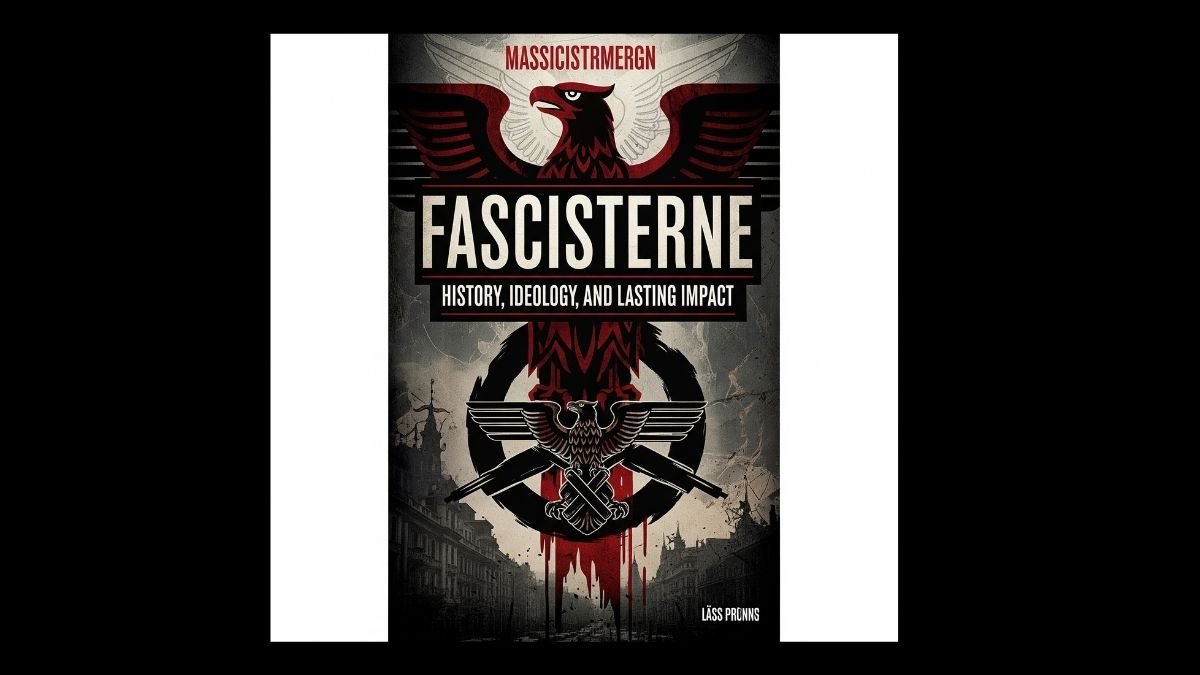
The term Fascisterne—the Danish plural for “The Fascists”—evokes one of the most turbulent and transformative eras in modern human history. Emerging from the ashes of World War I, these movements sought to dismantle the liberal democratic order in favor of a radical, ultranationalist rebirth. While the word is rooted in the Italian fascio, representing a bundle of rods tied together to signify strength through unity, its implementation across Europe took on various forms, each tailored to specific national anxieties. To understand the legacy of Fascisterne, one must look beyond the surface-level aesthetics of uniforms and parades and examine the deep-seated psychological and social factors that allowed such ideologies to take root in the early 20th century.
The Ideological Core of Fascisterne
At its heart, the ideology driving Fascisterne was a reactionary response to both the perceived failures of Enlightenment liberalism and the rising threat of international communism. Unlike traditional conservatism, which seeks to preserve established institutions, fascism was a revolutionary movement that aimed to forge a “New Man” through struggle and national rejuvenation.
National Rebirth and Palingenesis
A central pillar for Fascisterne was the concept of “palingenesis,” or national rebirth. Proponents argued that the nation was in a state of terminal decay, poisoned by materialism, individualism, and foreign influence. To reverse this, the movement promised a total overhaul of society, demanding absolute loyalty to the state above all else. This wasn’t just political; it was spiritual.
The Rejection of Individualism
For Fascisterne, the individual was secondary to the collective. This collectivism was not based on class, as in socialism, but on national or ethnic identity. The “fascist” view of the world saw life as a perpetual struggle between nations, where only the strongest and most disciplined would survive. Consequently, civil liberties were viewed as a weakness that hindered the state’s ability to act decisively.
The Italian Foundation: Where Fascisterne Began
To understand how Fascisterne became a global phenomenon, one must look at Italy under Benito Mussolini. Following the “mutilated victory” of World War I, Italy was a country rife with economic instability and social unrest.
Mussolini and the Blackshirts
Mussolini, a former socialist, recognized that the traditional political structures were failing to address the needs of the veterans and the middle class. He organized the Fasci di Combattimento, the original Fascisterne who wore black shirts and used paramilitary violence to suppress labor unions and leftist organizations. By 1922, the March on Rome effectively forced King Victor Emmanuel III to appoint Mussolini as Prime Minister.
The Totalitarian State
Once in power, the Italian Fascisterne worked to create a totalitarian state. The slogan “Everything in the State, nothing outside the State, nothing against the State” became the blueprint for their governance. They established the corporate state, which theoretically brought labor and capital together under state supervision, though in practice, it largely benefited industrial elites and the ruling party.
Fascisterne in the German Context: National Socialism
While Italy provided the blueprint, it was in Germany that the ideologies of Fascisterne took their most extreme and destructive form. The National Socialist German Workers’ Party (NSDAP), led by Adolf Hitler, adapted fascist principles to include a virulent and pseudo-scientific obsession with race.
The Impact of the Treaty of Versailles
The German Fascisterne gained traction by weaponizing the national humiliation of the Treaty of Versailles and the economic devastation of the Great Depression. They promised to tear up the treaty, reclaim “living space” (Lebensraum) in the East, and purify the German bloodline.
Institutionalized Racism
While Italian fascism focused heavily on the state as the supreme entity, the German iteration centered on the Volk (the people) and the Führer (the leader). The German Fascisterne implemented the Nuremberg Laws, systematically stripping Jews of their citizenship and laying the groundwork for the Holocaust. This racialization of the state was a departure from Mussolini’s earlier, more civic-focused nationalism, though Italy would eventually adopt similar racial laws under German influence.
The Spread of Fascisterne Across Europe
The success of Mussolini and Hitler inspired similar movements throughout the continent. In the 1930s, Fascisterne were not limited to just two countries; they were a pan-European phenomenon.
Spain and the Falange
In Spain, the Falange Española played a crucial role in the Spanish Civil War. While General Francisco Franco eventually consolidated power into a more traditional military dictatorship, the early influence of the Fascisterne was evident in the regime’s aesthetics, its suppression of regional identities (like Basque and Catalan), and its alliance with the Catholic Church to enforce social order.
Northern Europe and the Danish Context
In Denmark, the Danmarks Nationalsocialistiske Arbejderparti (DNSAP) represented the local branch of Fascisterne. Led by Frits Clausen, the party mimicked the German model but struggled to gain significant electoral traction in a country with a strong social democratic tradition. However, during the German occupation of Denmark (1940–1945), these local Fascisterne collaborated with the occupiers, leading to a legacy of national shame and post-war purges.
Economic Policies of Fascisterne
A common misconception is that Fascisterne were simply tools of big business. In reality, their economic policies were “Third Position”—purporting to be neither capitalist nor communist.
Autarky and Self-Sufficiency
The goal of most Fascisterne regimes was autarky, or total economic self-sufficiency. They wanted to ensure that the nation could survive a blockade during wartime. This led to massive public works projects, such as the German Autobahn, and a heavy emphasis on rearmament, which temporarily lowered unemployment but created an economy that could only be sustained through conquest and plunder.
Labor Control
To maintain social peace, Fascisterne abolished independent trade unions and replaced them with state-controlled organizations like the “Strength Through Joy” program in Germany. These organizations provided leisure activities and benefits to workers in exchange for their absolute political compliance and the surrender of their right to strike.
Propaganda and the Cult of Personality
The survival of Fascisterne depended heavily on the control of information and the glorification of the leader. This was the era where mass media—radio and cinema—was first utilized as a tool for psychological manipulation.
The Leader as a Secular God
In every country where Fascisterne took power, a cult of personality was built around a central figure. Whether it was Il Duce, Der Führer, or El Caudillo, the leader was portrayed as infallible and the sole embodiment of the national will. This messianic imagery was designed to bypass rational political discourse and appeal directly to the emotions of the masses.
Aesthetics and Spectacle
The Fascisterne were masters of political theater. Huge rallies, choreographed parades, and the use of ancient symbols (like the Roman salute) were designed to make the individual feel small and the movement feel invincible. This “aestheticization of politics” turned governance into a performance, distracting the public from the loss of their rights and the impending horrors of war.
The Collapse of Fascisterne and the Post-War Legacy
The end of World War II marked the definitive military defeat of the primary Fascisterne regimes. The discovery of the concentration camps and the devastation of the European continent led to a global repudiation of fascist ideology.
The Nuremberg Trials
For the first time in history, the leaders of the Fascisterne were held accountable for “crimes against humanity.” The Nuremberg Trials established that “following orders” was not a valid defense for participating in genocide or aggressive warfare. This was a pivotal moment in the development of international law.
Neo-Fascism in the Modern Era
Despite their defeat in 1945, the underlying sentiments that fueled Fascisterne never completely disappeared. In the decades following the war, various “Neo-Fascist” movements have emerged, often rebranding themselves under the guise of “identitarianism” or “national populism.” While these modern groups often eschew the overt symbols of the past, they continue to rely on the core tenets of hyper-nationalism, the scapegoating of minorities, and a disdain for democratic institutions.
Analyzing the Psychology of Fascisterne Support
Why did millions of people support Fascisterne? Historians and psychologists suggest it wasn’t just coercion; it was a response to a “crisis of meaning.”
-
Escape from Freedom: As psychologist Erich Fromm argued, the complexities of modern life and the pressures of individual responsibility led many to “escape from freedom” by surrendering their will to a powerful leader.
-
The Need for Belonging: In an increasingly atomized world, the Fascisterne offered a sense of community and purpose. Belonging to a “superior” group provided an ego boost to those who felt marginalized by economic shifts.
-
Fear of the “Other”: By creating an internal and external enemy, the Fascisterne gave people a target for their frustrations, turning complex systemic issues into simple narratives of “us vs. them.”
Conclusion: Lessons from the History of Fascisterne
The history of Fascisterne serves as a grim reminder of how fragile democratic institutions can be when faced with economic despair and social polarization. These movements did not rise in a vacuum; they were the product of a world that felt broken and a population that was willing to trade its liberty for the promise of order and national greatness.
As we look at the world today, the study of Fascisterne remains more relevant than ever. It teaches us that the language of grievance, the glorification of violence, and the erosion of truth are the early warning signs of a society sliding toward authoritarianism. Protecting democracy requires constant vigilance, an educated citizenry, and an unwavering commitment to the human rights that the Fascisterne once sought to extinguish.
Frequently Asked Questions (FAQs)
1. What is the difference between Fascisterne and Communism?
While both are totalitarian systems that suppress individual dissent, they differ in their view of social hierarchy. Fascisterne believe in a rigid social hierarchy and national/racial identity, whereas Communism aims for a classless society based on international worker solidarity. Fascists generally protect private property (so long as it serves the state), while Communists seek to abolish it.
2. Why is the term “Fascisterne” used in a Danish context?
“Fascisterne” is simply the Danish word for “The Fascists.” In historical discussions within Denmark, it refers both to the international movement and the specific local collaborators who supported the ideology during the 1930s and the subsequent Nazi occupation.
3. Did all Fascisterne movements agree with each other?
Not necessarily. Because Fascisterne were hyper-nationalists, their interests often clashed. For example, Italian and German fascists initially disagreed over the status of Austria. However, they were united by their shared hatred of liberalism, Marxism, and their preference for authoritarian rule.
4. How did the Great Depression help the Fascisterne?
The economic collapse of 1929 destroyed faith in mainstream democratic parties. High unemployment and hyperinflation made the radical promises of the Fascisterne—such as guaranteed jobs and the restoration of national pride—seem like an attractive alternative to the perceived chaos of the free market.
5. Can Fascisterne exist in a democracy?
Modern political science suggests that Fascisterne often use the mechanisms of democracy (such as elections and free speech) to gain a foothold in government. Once they achieve sufficient power, they typically work to dismantle the very democratic checks and balances that allowed them to rise, eventually transitioning into an autocratic regime.
