

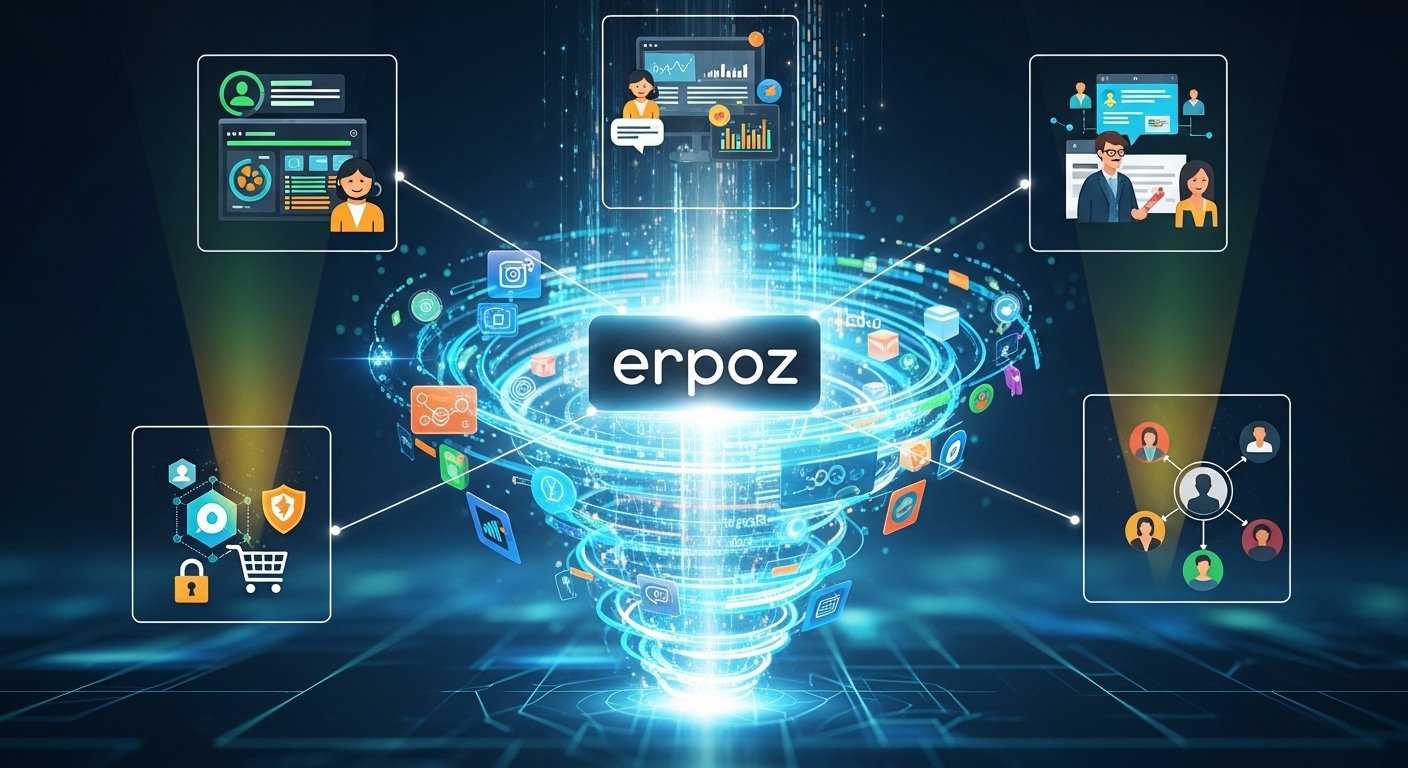
Businesses of all sizes are challenged with managing complex operations, disconnected tools, and fragmented data. Erpoz emerges as a modern Enterprise Resource Planning (ERP) solution crafted to unify core business functions into one powerful, intuitive system. Unlike traditional ERP platforms that were often costly, complex, and difficult to implement, Erpoz is built for the cloud era — prioritizing simplicity, scalability, and real‑time visibility.
In this article, we explore what Erpoz is, how it works, why it matters, and how it equips modern businesses with the tools necessary to thrive in a competitive digital landscape.
1. What is Erpoz? A Detailed Explanation
1.1 The Meaning and Definition of Erpoz
At its core, Erpoz is a cloud‑based ERP software platform designed to integrate multiple business functions — such as sales, inventory management, customer relationship management (CRM), finance, and analytics — into one centralized and synchronized environment.
Rather than operating multiple disconnected applications, companies using Erpoz benefit from real‑time data updates, centralized workflows, and automated processes that reduce manual work and error. In essence, Erpoz replaces fragmented systems with one unified platform that supports organizational performance and scalability.
1.2 How Erpoz Evolved Over Time
Traditional ERP systems were first introduced to address enterprise‑level operational challenges for large corporations. While powerful, these legacy systems were expensive, difficult to configure, and often required specialized technical teams. With the rise of cloud computing and the demand for affordable yet robust business tools, solutions like Erpoz were developed to democratize ERP — making it accessible for small and medium‑sized enterprises as well as larger organizations seeking agility.
Erpoz represents a new wave of business platforms that combine deep functionality with ease of use — allowing businesses to scale operations while keeping costs and complexity manageable.
2. Core Components of Erpoz
2.1 Sales and Point‑of‑Sale (POS) Management
The sales component of Erpoz is designed to handle POS operations efficiently and flexibly. Whether conducting in‑store retail transactions or managing online orders, this module ensures accurate sales tracking, multiple payment methods, and seamless connection to inventory data.
This integration means a sale instantly updates stock levels, accounting records, and customer profiles — eliminating redundancy and enhancing accuracy.
2.2 Inventory and Stock Control
Inventory management is one of Erpoz’s most powerful features. Through real‑time visibility into stock levels across multiple locations, warehouse teams can manage orders, adjust reorder thresholds, and coordinate supplies with minimal effort.
For businesses that face seasonal demand fluctuations or multi‑location inventory challenges, Erpoz provides the agility and transparency required to optimize stock and reduce waste.
2.3 Customer Relationship Management (CRM)
Erpoz’s CRM features help businesses track customer interactions, maintain comprehensive profiles, and analyze behavior patterns that improve service and retention strategies.
By integrating CRM with sales and marketing tools, companies gain insight into customer journeys, enabling personalized campaigns, better customer support, and improved conversion rates.
2.4 Reporting and Analytics Tools
Another strength of Erpoz lies in its reporting and analytics modules. Custom dashboards deliver real‑time insights into key performance indicators (KPIs), financial results, sales trends, and operational metrics.
Decision‑makers no longer rely on outdated reports but instead access live data that helps them plan strategically and respond to market changes faster.
3. Key Benefits of Choosing Erpoz
3.1 Enhanced Operational Efficiency
By centralizing business functions, Erpoz eliminates the need for disconnected software and manual data transfer. This saves time, reduces errors, and increases productivity throughout the organization.
3.2 Real‑Time Decision Making and Business Intelligence
Erpoz’s real‑time data synchronization means that leaders have access to up‑to‑the‑minute insights. Instead of waiting days for reconciled data, teams can make informed decisions instantly — a significant competitive advantage.
3.3 Scalability for Growth
Erpoz is designed to grow with your business. Whether onboarding new users, adding new workflows, or opening additional locations, the platform scales without requiring major infrastructure changes or costly system overhauls.
3.4 Cost Reductions and Simplified IT Demands
Traditional ERP implementations often incur high licensing fees and infrastructure costs. In contrast, the cloud‑native architecture of Erpoz reduces upfront investment and ongoing maintenance expenses.
4. Real‑World Applications of Erpoz Across Industries
4.1 Retail and E‑Commerce
Retail businesses benefit from integrated POS systems, real‑time inventory updates, and seamless sales tracking. Erpoz helps retailers respond faster to demand shifts, optimize stock levels, and deliver smoother customer experiences.
4.2 Small and Medium‑Sized Enterprises (SMEs)
For SMEs, Erpoz offers enterprise‑level ERP capabilities without the complexity or expense generally associated with such tools. The platform allows smaller businesses to manage growth, automate workflows, and gain competitive advantage.
4.3 Service and Project‑Based Businesses
Service providers use Erpoz to handle project tracking, billing, and client management. Integrated reporting and scheduling features help teams coordinate tasks and deliver results efficiently.
4.4 Manufacturing and Logistics
In manufacturing environments, real‑time visibility into production data, resource usage, and inventory movements improves planning and reduces downtime. Erpoz integrates supply chain insights that help streamline operations.
5. How to Successfully Implement Erpoz
5.1 Planning and Goal Setting
A successful Erpoz implementation starts with clear goals. Define what operational challenges you want the platform to solve, whether inventory accuracy, improved reporting, or automated workflows.
5.2 Phased Rollout Strategy
Instead of deploying all features at once, start with core modules such as inventory and sales before adding CRM, financial tools, or analytics. This phased approach helps teams adapt more easily.
5.3 Training and Support
Training is essential to empower users with confidence. Provide hands‑on sessions that explore typical business scenarios and workflows.
Conclusion: Why Erpoz Matters in the Digital Business Era
In a rapidly evolving business environment, staying competitive requires tools that are both powerful and user‑friendly. Erpoz fits this need by delivering a comprehensive, cloud‑based ERP solution that unifies operations, improves accuracy, provides real‑time insights, and supports scalability.
Whether you are a growing small business, a established enterprise, or a service‑oriented company looking to improve efficiency, Erpoz offers a flexible platform that adapts to your needs. By aligning processes, data, and decisions into one system, Erpoz helps organizations eliminate barriers, reduce costs, and make smarter decisions — making it a strategic asset for any forward‑thinking business.
5 Relevant FAQs About Erpoz
1. What exactly is Erpoz?
Answer: Erpoz is a cloud‑based Enterprise Resource Planning (ERP) platform that centralizes key business functions such as inventory, sales, finance, and customer management into one system.
2. How does Erpoz differ from traditional ERP systems?
Answer: Unlike traditional ERP platforms that are often expensive and complex, Erpoz offers a cloud‑native, scalable solution with easier setup, lower costs, and real‑time visibility.
3. Can Erpoz be used by small businesses?
Answer: Yes. Erpoz is specifically designed to be accessible for small and medium‑sized businesses, providing essential ERP capabilities without enterprise‑level complexity.
4. What industries benefit the most from Erpoz?
Answer: Retail, manufacturing, service businesses, logistics, and SMEs benefit significantly from Erpoz due to its integrated workflows and real‑time data management.
5. Is data secure in Erpoz’s cloud environment?
Answer: Yes. Erpoz’s cloud infrastructure includes access controls, encryption, and compliance features to protect business data and maintain security standards.
