
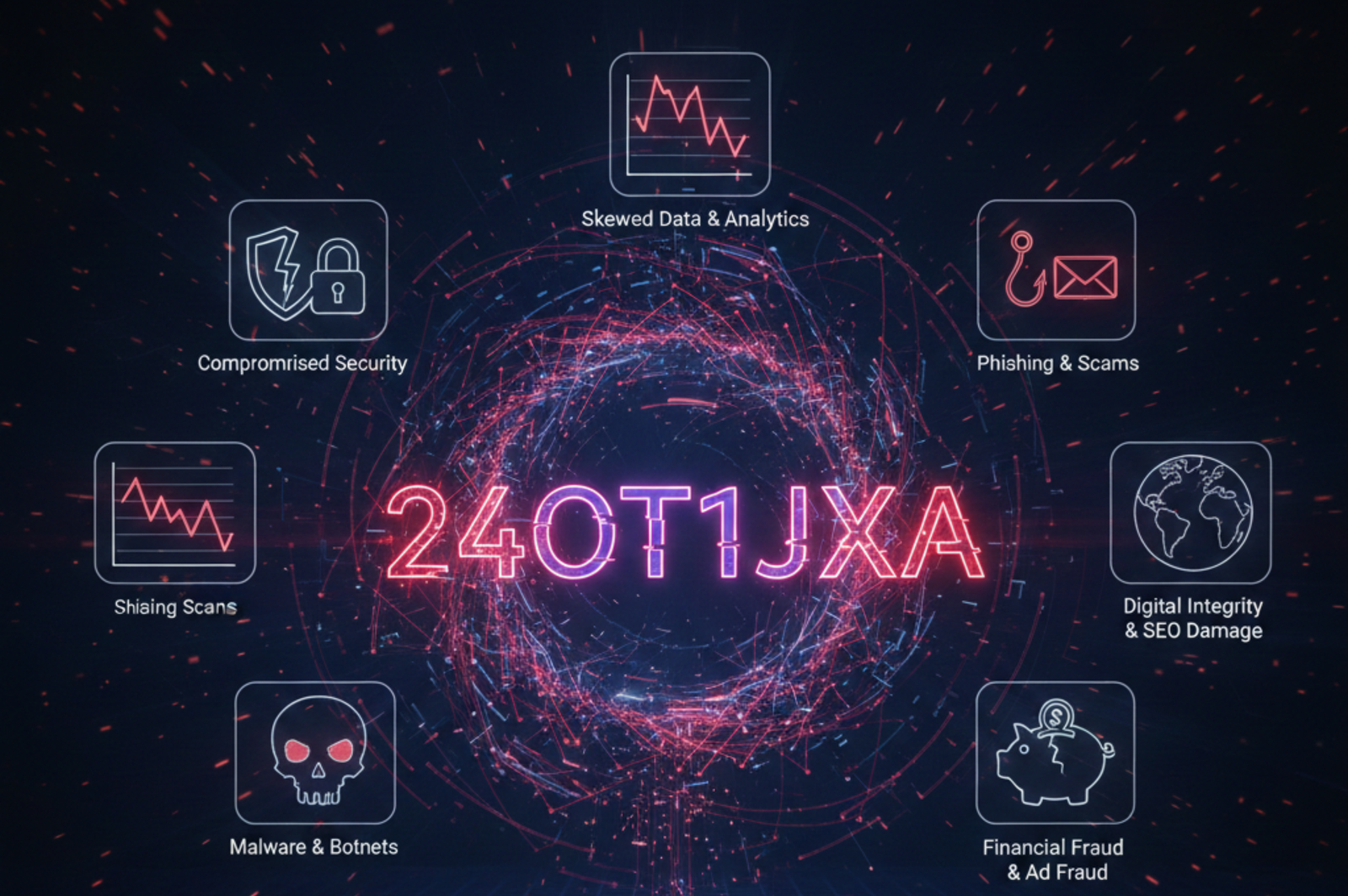
In the modern era of cybersecurity, we often focus on well-known threats like “trojans” or “ransomware.” However, the most insidious threats often hide behind seemingly innocuous alphanumeric strings. Recently, the query why is 24ot1jxa bad has gained traction among data analysts and security-conscious users. At first glance, 24ot1jxa appears to be a random sequence of characters, but in the world of automated exploitation, such strings are rarely accidental. They often serve as “fingerprints” for malicious scripts, botnets, and data-harvesting operations that compromise the health of the internet.
The Technical Reality: Why Is 24ot1jxa Bad for Systems?
To understand why is 24ot1jxa bad, one must look at how automated systems communicate. When a server receives a request, it logs metadata. Malicious actors use specific strings like 24ot1jxa to “tag” their progress across different websites. This allows them to track which servers are vulnerable to specific exploits.
Exploitation of Vulnerable Ports
Often, identifiers like 24ot1jxa are found in the logs of brute-force attacks. If a bot is attempting to gain unauthorized access to a WordPress site or an FTP server, it may use this string as a unique session ID. For a system administrator, seeing this string is a warning sign that an automated entity is knocking on the digital door, looking for a way in.
Corruption of Database Tables
One of the primary reasons why is 24ot1jxa bad involves “garbage data” injection. When a website has poorly sanitized input fields, attackers can inject strings like 24ot1jxa into the database. Over time, thousands of these entries can bloat the database, leading to slow query times and, in some cases, total system crashes. This is not just a nuisance; it is a direct attack on the availability of digital services.
Why Is 24ot1jxa Bad for Digital Marketing and Analytics?
Marketing professionals often ask why is 24ot1jxa bad when they notice their traffic metrics behaving erratically. Digital marketing relies on “clean” data to allocate budgets and determine ROI.
The Problem of Referral Spam
Referral spam is a technique where bots “visit” a website repeatedly, leaving a trace in the analytics dashboard. If 24ot1jxa is part of a referral URL, it tricks the website owner into visiting the attacker’s site out of curiosity. This “ghost traffic” makes it impossible to tell how many real human beings are actually interacting with your brand.
Skewing the Conversion Funnel
If you are running an e-commerce site, the reason why is 24ot1jxa bad becomes even clearer. Bots using this identifier may add items to carts or sign up for newsletters without ever making a purchase. This ruins your conversion rate data, leading you to believe your website design is failing when, in reality, your traffic is simply not human.
The Hidden Dangers: Why Is 24ot1jxa Bad for Personal Privacy?
For the average individual, the question of why is 24ot1jxa bad usually arises after seeing the string in a weird place—perhaps a browser extension or a strange cookie name.
Tracking and Profiling
While many cookies are legitimate and help websites remember your preferences, some are “zombie cookies” or “supercookies” that use identifiers like 24ot1jxa to track your behavior across multiple unrelated websites. This allows third-party advertisers or malicious actors to build a disturbingly accurate profile of your habits, interests, and vulnerabilities.
Association with Malicious Redirects
If you click a link and see 24ot1jxa in the address bar during a series of rapid redirects, you are likely being sent to a “landing page” for a scam. These pages are designed to look like official bank sites or tech support portals. In this context, the identifier is used by the scammer to track which “affiliate” sent the victim to the trap.
Why Is 24ot1jxa Bad for SEO and Search Visibility?
Search Engine Optimization (SEO) is a fragile ecosystem. When a site is associated with “bad” strings, its reputation in the eyes of search engines like Google can plummet.
Indexing Gibberish Content
If a site is hacked and thousands of “junk” pages are created—often containing strings like 24ot1jxa—search engines will index this content. This is known as “SEO Spam.” When a search engine’s crawler sees your site hosting gibberish, it may decide that your site is no longer a reliable source of information, leading to a massive drop in rankings.
Backlink Toxicity
Sometimes, the reason why is 24ot1jxa bad is that it appears in the anchor text of thousands of low-quality backlinks pointing to your site. This is often a “Negative SEO” attack launched by competitors to get your site penalized for “unnatural linking patterns.”
How to Detect and Mitigate the Presence of 24ot1jxa
Knowing why is 24ot1jxa bad is only half the battle. You must also know how to purge it from your digital life.
-
Log Analysis: Regularly scan your server logs for “24ot1jxa.” If it appears frequently from a single IP address, block that IP immediately at the firewall level.
-
Input Sanitization: Ensure that all forms on your website (contact forms, search bars) use strict validation. This prevents bots from injecting the string into your database.
-
Browser Hygiene: If you suspect you are being tracked, clear your browser’s cache and cookies. Use privacy-focused extensions that block “fingerprinting” scripts.
-
Security Headers: Implement Content Security Policy (CSP) headers on your website to prevent unauthorized scripts from running and using malicious identifiers.
Why Is 24ot1jxa Bad in the Context of Ad Fraud?
The global cost of ad fraud is estimated to be in the tens of billions of dollars. Within this massive criminal industry, identifiers like 24ot1jxa play a specific role.
Click Farms and Automated Browsers
Click farms use “headless browsers” (browsers without a graphical interface) to click on ads. These browsers often leave behind footprints. Investigating why is 24ot1jxa bad in an advertising context reveals that it is often a parameter used to verify that a “click” was successfully recorded by the botnet’s command-and-control server.
Draining Small Business Budgets
For a small business owner, every dollar counts. If a botnet is targeting your niche, and you don’t have bot protection, you might spend your entire monthly budget on “clicks” that have the 24ot1jxa signature. These are not potential customers; they are lines of code designed to steal your marketing capital.
Conclusion: Staying Vigilant Against 24ot1jxa
In conclusion, understanding why is 24ot1jxa bad requires a holistic view of the internet’s darker corners. It is not just a string; it is a symptom of a larger problem. Whether it is slowing down your website, skewing your marketing data, or threatening your personal privacy, its presence is a call to action.
The digital world is a constant tug-of-war between those who build and those who exploit. By recognizing the patterns of exploitation—like the use of the 24ot1jxa identifier—we can better prepare ourselves to defend our digital assets. Vigilance, updated security protocols, and a healthy dose of skepticism are the best tools we have. Always remember that in the digital realm, if something looks like “junk,” it is often a cleverly disguised tool for something much more problematic.
Frequently Asked Questions (FAQs)
1. Is 24ot1jxa a specific type of malware?
No, it is not a specific malware file like a .exe or .dll. Instead, it is an alphanumeric string or “tag” often found within the code or logs of malicious scripts, botnets, and tracking systems. It is a marker of bad activity rather than the virus itself.
2. Can 24ot1jxa damage my computer’s hardware?
No, 24ot1jxa cannot physically damage your hardware. However, the activities associated with it—such as heavy bot traffic or malware—can cause your CPU to overheat due to high usage or lead to data loss on your hard drive.
3. How do I know if my website is affected by 24ot1jxa?
The best way to check is to search your “Access Logs” or “Error Logs” in your hosting control panel. If you see “24ot1jxa” appearing in the request strings or user-agent fields, your site is likely being targeted by a botnet.
4. Is it safe to search for “24ot1jxa” on Google?
Searching for the term is generally safe. However, be cautious about clicking on results that look like “auto-generated” websites or forums that ask you to download “fixer” software. These “fixers” are often malware themselves.
5. Why is 24ot1jxa bad for my email security?
If you see this string in the “Unsubscribe” link or the hidden headers of an email, it is a sign that the email is likely part of a sophisticated spam campaign. It is used to tra
